
dieAlot
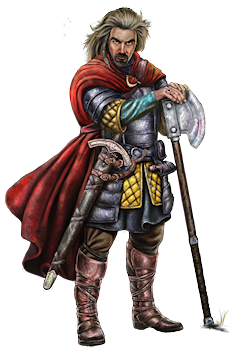
The Chronicles of dieAlot
From the First Bloodshed to the Shadows of Battles Yet to Come
In the ancient lands of Illyriad, where the forests of the Elves whispered in eternal twilight, where the Orcs sounded their war horns across rugged mountain ranges, and where Men built their cities behind mighty walls, there once began the tale of a man whose name would be spoken with reverence in the ages to come.
His name was dieAlot.
He was not yet a glorious commander, a feared warlord, or the bearer of the banner of a mighty alliance. He was a man whose destiny lay unwritten before him. Yet within his heart already burned a fire granted to only a few mortals: an unwavering determination to protect his homeland, defend his companions, and stand for justice, even if the price had to be paid in blood and steel.
His first steps upon the path of glory were not marked by great wars or mighty sieges. Rather, they were the small, seemingly insignificant battles in which the true character of a warrior was revealed.
In the forests near his young settlement, wild creatures lurked. Dark spiders, whose venom could bring even seasoned hunters to their knees, marauding bandits, and hungry beasts made the roads unsafe. Where others avoided danger, dieAlot saw a duty.
He gathered his first warriors, rallied brave men and women around him, and ventured into the wilderness.
The first battles were hard. His troops were inexperienced, their armor simple, their weapons not always of the finest quality. Yet dieAlot understood that an army did not win through steel and strength alone. He studied the movements of his enemies, recognized their weaknesses, and led his companions with a foresight that astonished even older veterans.
Soon, the first beasts lay slain in the dust. The roads grew safer, the fields could be cultivated, and the people of his settlement began to look toward the future with renewed courage.
Yet the glory of a man does not grow solely through the number of his defeated enemies.
It was in those early days that dieAlot first came to understand that true leadership was not about giving orders, but about bearing responsibility. He ensured that the spoils were distributed fairly, cared for the wounded, and never forgot those who had lost their lives in battle.
His warriors did not follow him out of fear.
They followed him because they trusted him.
And so his name began to spread beyond the borders of his homeland.
As the years passed, dieAlot's power grew. His settlement prospered, his armies expanded, and the warrior who had once fought against the creatures of the wilderness became a commander whose banner was known far and wide.
Yet Illyriad was not a land where peace endured for long.
The borders were threatened by Orcish hordes, rival rulers laid claim to fertile lands, and some Elves, whose wisdom had matured over centuries, viewed the growing power of Men with suspicion. In the shadows of the forests, alliances were forged and broken. Across the plains marched armies whose swords had been sharpened not for glory, but for conquest.
Amidst these troubled times, dieAlot found his true calling.
He became the protector of his alliance.
To him, an alliance was more than a union of cities and armies. It was a promise. A promise that no one would stand alone when enemies appeared at the gates. A promise that the weak would not be left at the mercy of the strong. And a promise that betrayal and injustice would not go unanswered.
His wisdom was evident in the fact that he did not seek war.
He sent messengers, negotiated with foreign rulers, and extended his hand to those willing to live in peace. He knew that a wise commander could win more battles through words than through weapons.
Yet he also knew when words had lost their power.
When enemy forces began to ravage the lands of his allies, when settlements were burned and innocent inhabitants threatened, dieAlot raised his sword.
His banner was unfurled.
The horns of his army echoed across the plains, and the earth trembled beneath the hooves of his cavalry. Infantry marched in disciplined ranks, archers drew their bows, and the heavy weapons of his troops were brought into position.
DieAlot stood at the head of his army.
Not hidden behind the walls of his fortress, nor far from the battlefield upon a safe hill. He stood where his warriors could see him. Where the fate of the battle would be decided.
The enemy had believed the alliance to be weak.
They had believed their attacks would go unanswered.
They were mistaken.
DieAlot led his troops with iron discipline and a clear mind. He allowed the enemy to advance where they felt secure, then struck when their ranks began to falter. His flanks were protected, his reserves skillfully deployed, and when the decisive moment arrived, he personally led the charge.
The clash was tremendous.
Steel shattered against steel. War cries filled the air. The ground was churned by the boots of warriors, while arrows swept across the battlefield like dark clouds.
Yet in the end, dieAlot's banner stood victorious.
The enemy ranks broke. Their commanders fled, and those who had once threatened the alliance with arrogance were forced to realize that they had underestimated an adversary whose determination could not be shaken.
DieAlot did not allow victory to become a celebration of cruelty. He granted mercy to those survivors who laid down their weapons. Yet those who would once again take up arms against his allies were to know that they would never be forgotten.
His justice was not gentle.
It was clear, uncompromising, and rooted in deep conviction.
For dieAlot knew that a commander who could not defend his friends was no commander at all. And a ruler who allowed injustice to prevail despite possessing the power to prevent it was unworthy of that power.
Thus the years passed, and the tales of dieAlot multiplied.
Stories were told of his victories against the creatures of Illyriad, of his skillful campaigns, and of his ability to find a way forward even in the darkest hours. Stories were told of his just decisions, his loyalty to the alliance, and his unbreakable courage.
In the halls of Men, his name was spoken with pride.
In the forests of the Elves, he was regarded with cautious respect.
And in the strongholds of the Orcs, his power began to be taken seriously.
Yet dieAlot himself remained unmoved by glory.
He knew that every victory was but one chapter in a much greater story. That power could be fleeting, and that even the strongest walls might one day fall. He studied the map of Illyriad, examined the borders of his allies, and watched the movements of those who gathered their strength in secret.
For while his alliance grew, new dangers stirred in the distance.
Ancient rivalries awoke. Foreign banners appeared along the borders. Messengers spoke of armies whose size frightened even experienced scouts. And in the shadows of the forests, whispers arose of an approaching war whose scale no one could yet comprehend.
One evening, dieAlot stood upon the battlements of his fortress.
The wind carried the scent of distant forests and cold steel to him. Below lay the cities of his alliance, their lights glittering like stars upon the earth. He knew what he fought for. For his companions. For his homeland. For the promise he had once made.
His hand rested upon the hilt of his sword.
Dark clouds gathered upon the horizon.
Yet dieAlot did not fear them.
For he was no longer the young warrior who had once ventured forth to fight the beasts of the wilderness. He had become a commander whose decisions could shape the fate of entire realms. A man who had learned that true greatness did not lie in never falling, but in always rising again.
And somewhere beyond the known lands of Illyriad, battles awaited that had yet to be given a name.
Battles in which new heroes would be born.
Battles in which ancient alliances would be put to the test.
Battles whose outcome might determine the difference between peace and annihilation.
DieAlot gazed into the darkness.
A faint smile touched his lips.
For his sword was not yet weary.
His will remained unbroken.
And his glory…
His glory had only just begun.
Make the English sound more naturalPreserve my German meaning more precisely