
Granik
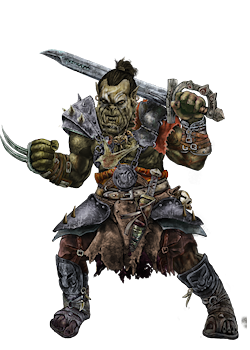
"The Emberfang Rising"
In the jagged hills beyond the Frostspine Peaks, a fire burned not in the hearth, but in the hearts of the Emberfang tribe.
They were small—only thirty strong, counting the young—but they were fierce. Once part of a greater horde shattered by infighting and famine, they had survived by hunting wolves and raiding goblin caravans. But survival was not enough for Chief Granik.
“Orcs were not made to fade,” he told them, standing before the sacred stone altar of Karrn, the war god. “We were made to conquer, to rise, to be sung of in the bones of the earth.”
His warriors roared their agreement, blood pounding in their chests.
First, they took the Raventusk Pass, where bandits had made camp. Granik led the charge himself, wielding a black-iron axe known as Fangsplitter. The Emberfang fought like starved beasts. When the dust cleared, the bandits lay dead or fled, and their weapons became the first forge-stock of the orcs’ rebirth.
Next, they struck deals—not with men, but with hill trolls and ogre clans. Granik offered steel and salt, things the Emberfang could now provide. In return, he gained scouts and muscle. These uneasy pacts grew into shaky alliances. Where the Emberfang rode, others began to take notice.
Their tactics changed too. No longer just brutes with clubs, they learned to fight in formation, to build siege carts, to enchant blades with runes. A shaman named Uzra Firetongue called down red lightning from the skies and claimed it was the blessing of Karrn himself.
Whispers spread. Villagers spoke of an orc tribe that fought like warlords, traded like merchants, and prayed like kings. Some laughed. Others watched their borders.
Then came the Siege of Dunwald—a proud dwarf fortress said to have stood for two centuries. The Emberfang laid siege for six days. On the seventh, the walls fell.
Granik did not sack the city. He offered terms. Half the vaults in gold, and tribute every winter. The dwarves, stunned by the offer and the restraint, agreed. It was better than death—and perhaps the start of something stranger.
By the time the Emberfang banners—black with a red fang sigil—flew over five valleys, bards had begun to sing of them. Some called them tyrants. Others called them visionaries. But all agreed: a new power had risen, not in marble halls or elven spires, but from the blood-stained hills of the wilds.
And deep within his war tent, Granik sharpened his axe and smiled.
"Glory is not given," he murmured. "It is taken. And we have only just begun."